
Designing a Multi-Role Growth Platform
 Yliway


-
Role
Product Designer & Design Lead
-
Scope
UX Architecture · Navigation Redesign · Design System · Team Leadership
-
Platform
Web App
-
Team
CEO · Business Analyst · 2 Junior Designers
Context
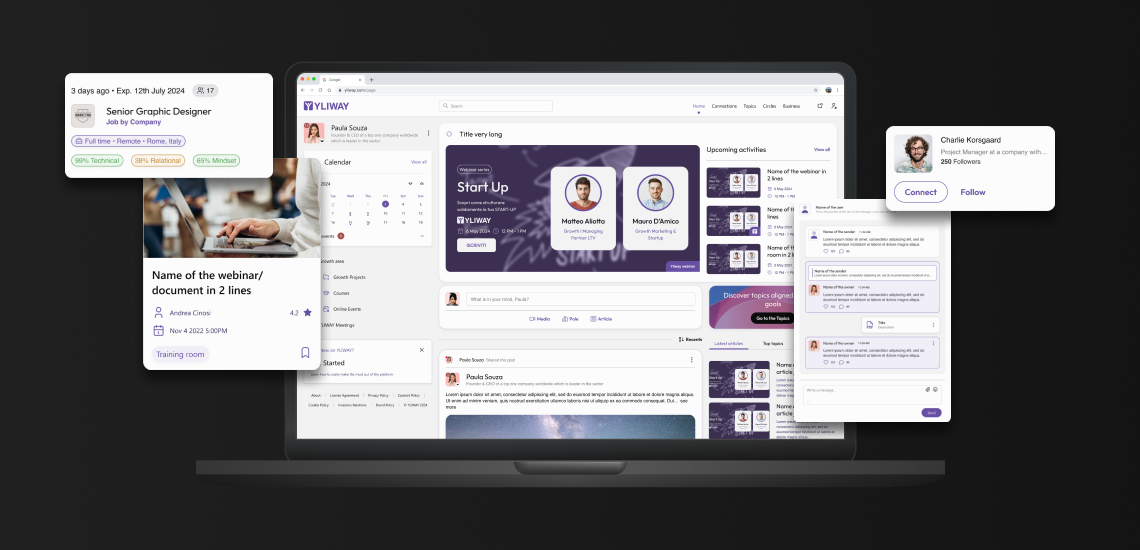
Yliway is a professional growth ecosystem combining networking, recruitment, learning and business tools within a single platform.
It serves multiple user roles — freelancers, students, companies, recruiters and educators — each with different goals and workflows.
The product ambition was high.
The experience lacked structural clarity.
The Challenge
The platform had expanded rapidly in features, but without a unified UX foundation.
Key issues:
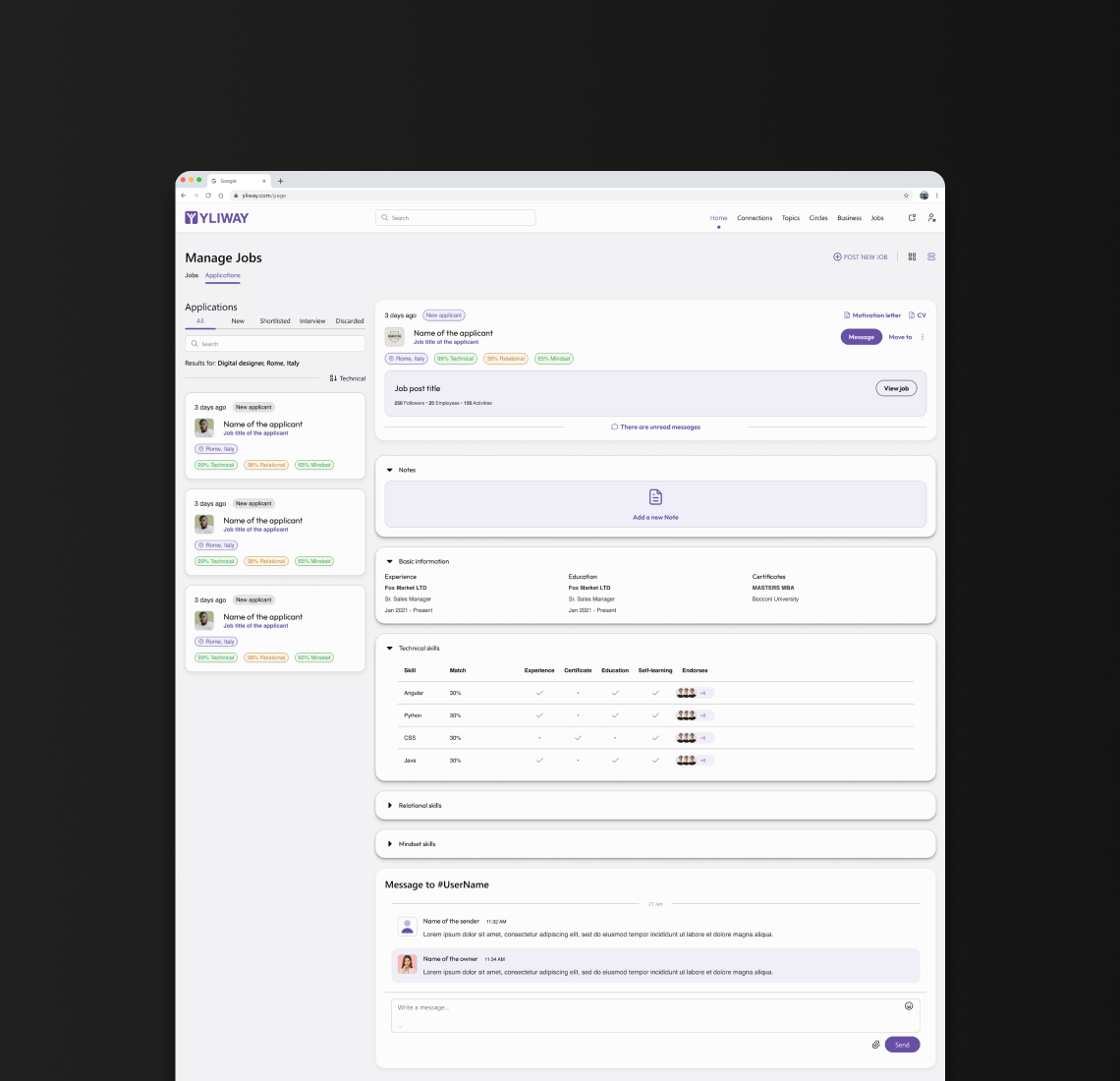
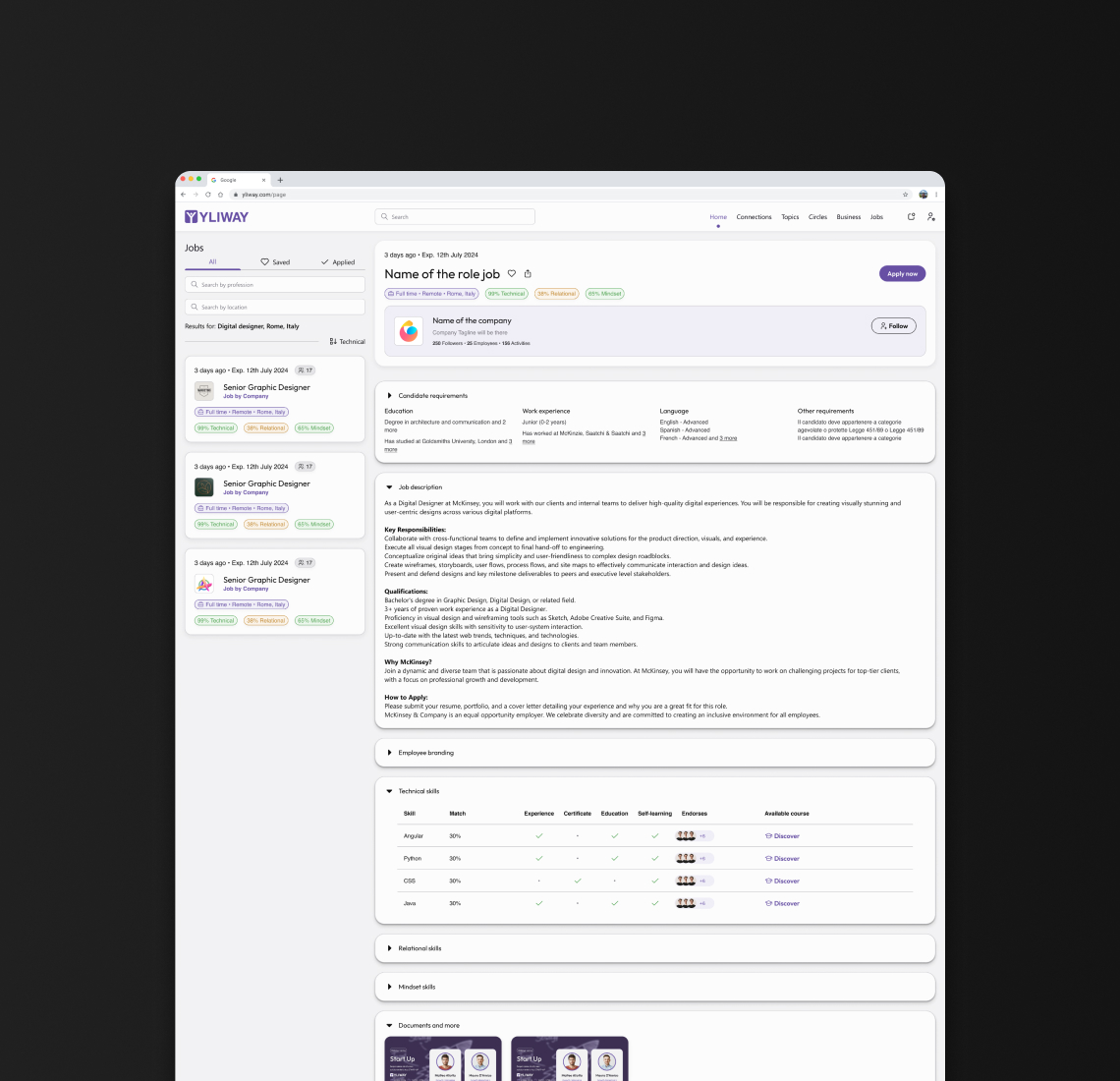
- Fragmented navigation across modules
- Role-based dashboards without clear hierarchy
- Overlapping feature logic
- Limited discoverability of core capabilities
- No scalable Design System
The main friction wasn’t missing functionality — it was structural overload.
Users struggled to understand what the platform truly offered beyond a traditional professional social feed.
My Responsibility
I was brought in to bring structure, clarity and scalability.
I worked on two parallel tracks:
- Maintaining and improving the live product
- Designing a future-ready system-based version (v5.0)
My focus areas:
- Rebuilding the Information Architecture
- Redefining navigation logic
- Clarifying multi-role UX flows
- Creating a full Design System from scratch
- Leading and mentoring two junior designers
- Supporting prioritization and structured execution
Structural Reset
Information Architecture
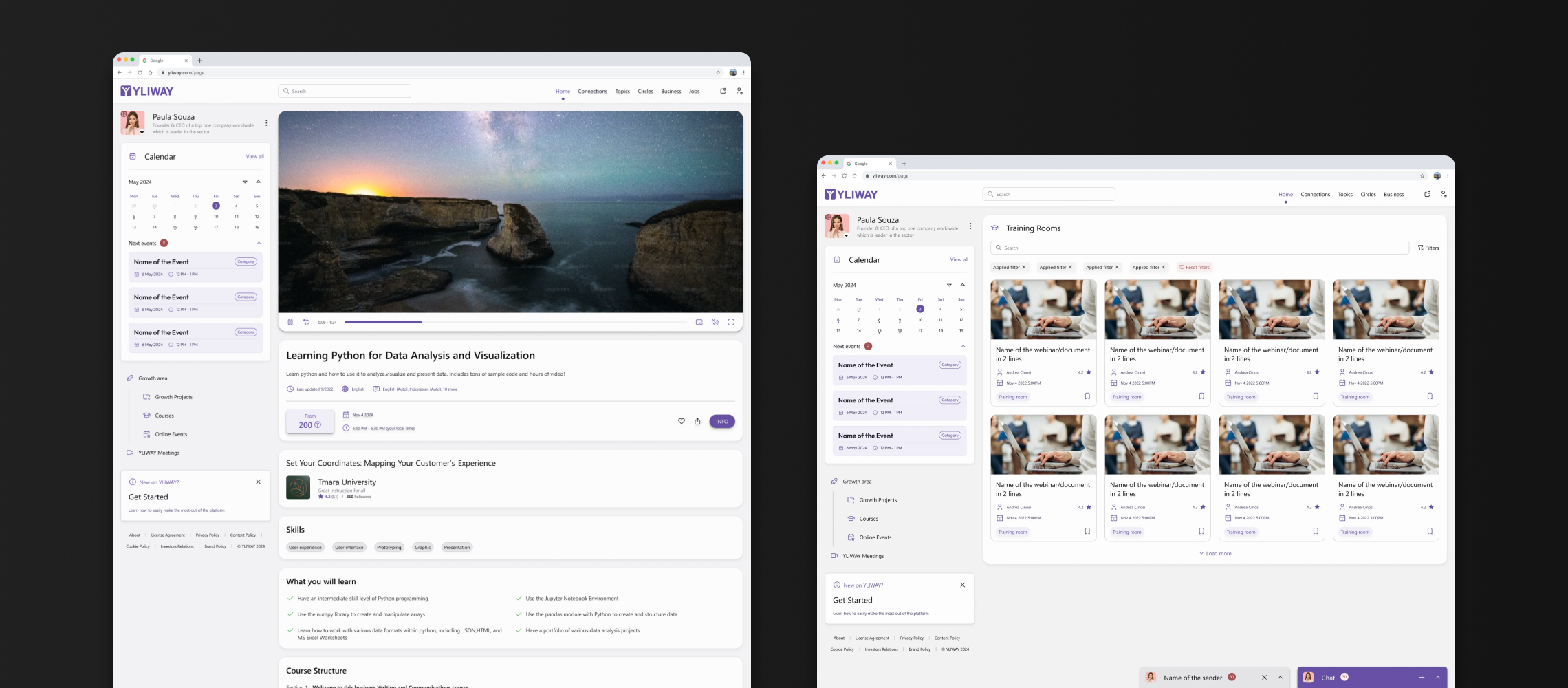
I redesigned the sitemap and navigation model to:
- Reduce cross-module friction
- Clarify entry points for each user type
- Surface platform capabilities earlier in the journey
- Establish clearer separation between social, learning and business areas
The objective was to turn feature accumulation into intentional structure.
(Insert sitemap / navigation redesign visuals)
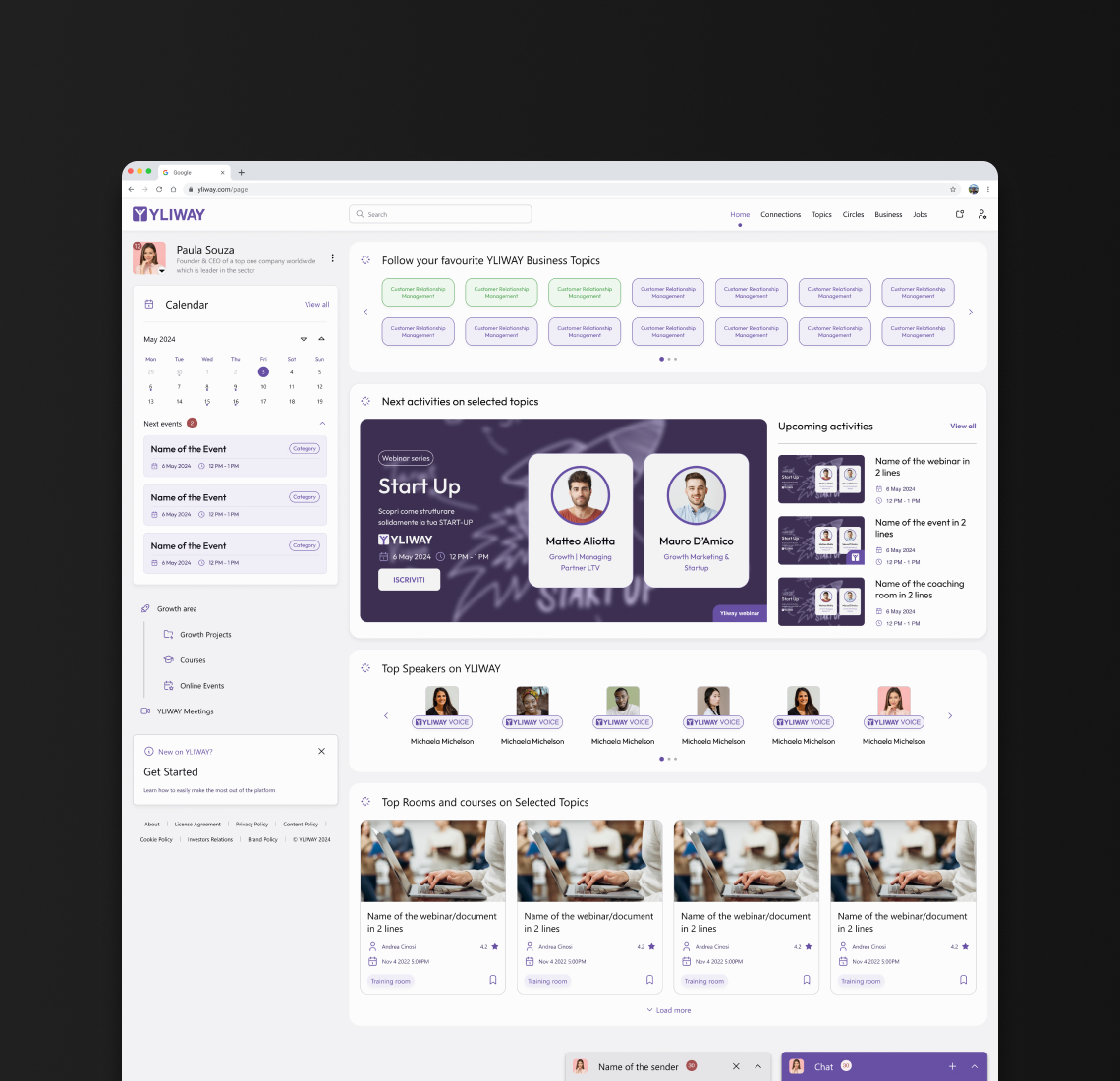
Role-Based UX Clarity
Each user type interacts with the platform differently.
I introduced:
- Clear dashboard logic per role
- Contextual primary actions
- Reduced cognitive branching
- Stronger hierarchy within complex layouts
This improved orientation and reduced ambiguity across user journeys.
(Insert dashboard comparisons)
Visual & Interaction Evolution
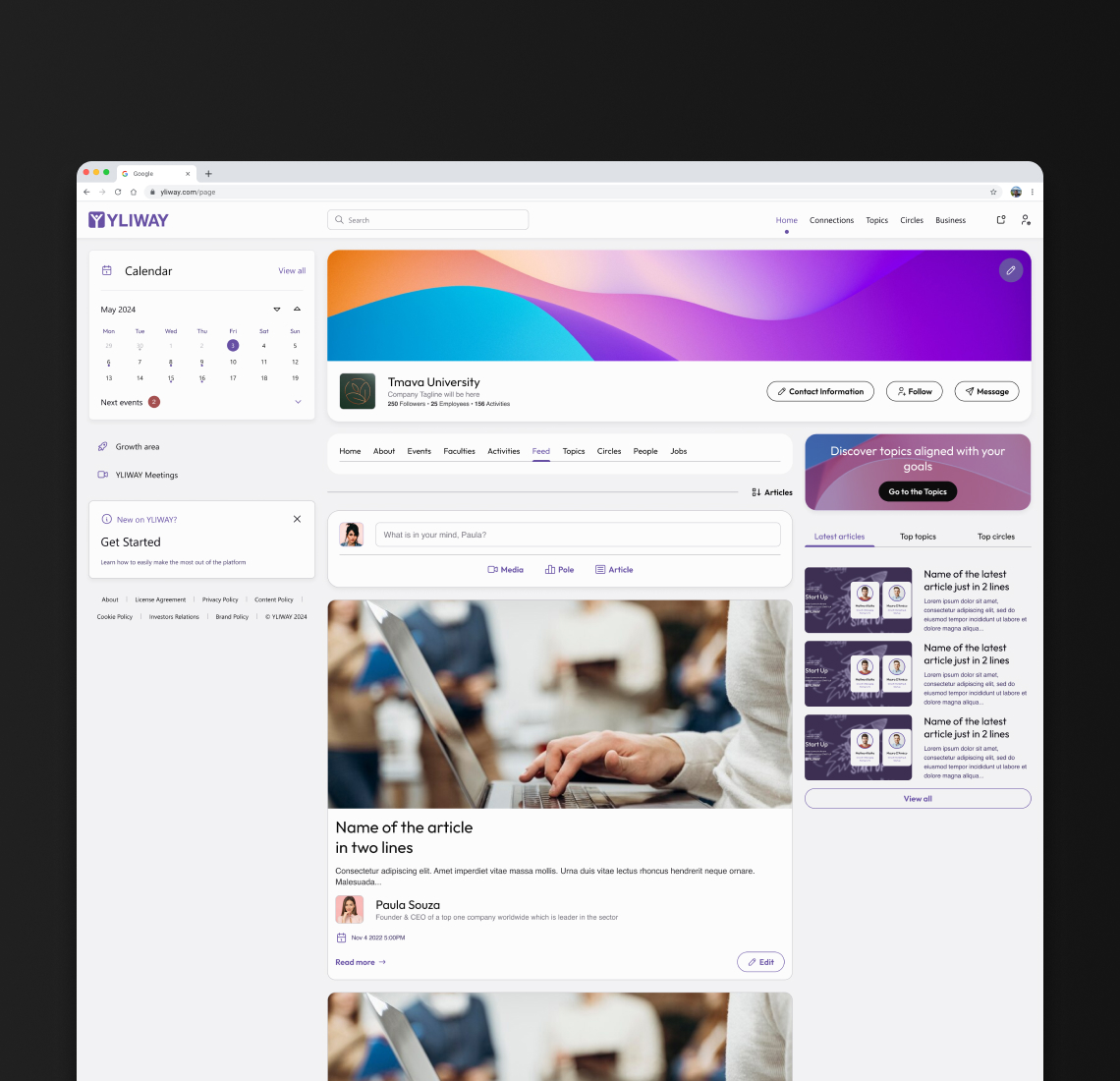
The original UI closely resembled traditional professional networks, limiting differentiation and clarity.
The redesign focused on:
- Stronger visual hierarchy
- Reduced visual noise
- Clearer content grouping
- More intentional spacing and rhythm
- Improved readability across dense interfaces
Clarity became the primary visual principle.
(Insert before/after UI comparisons)
Building the System (v5.0)
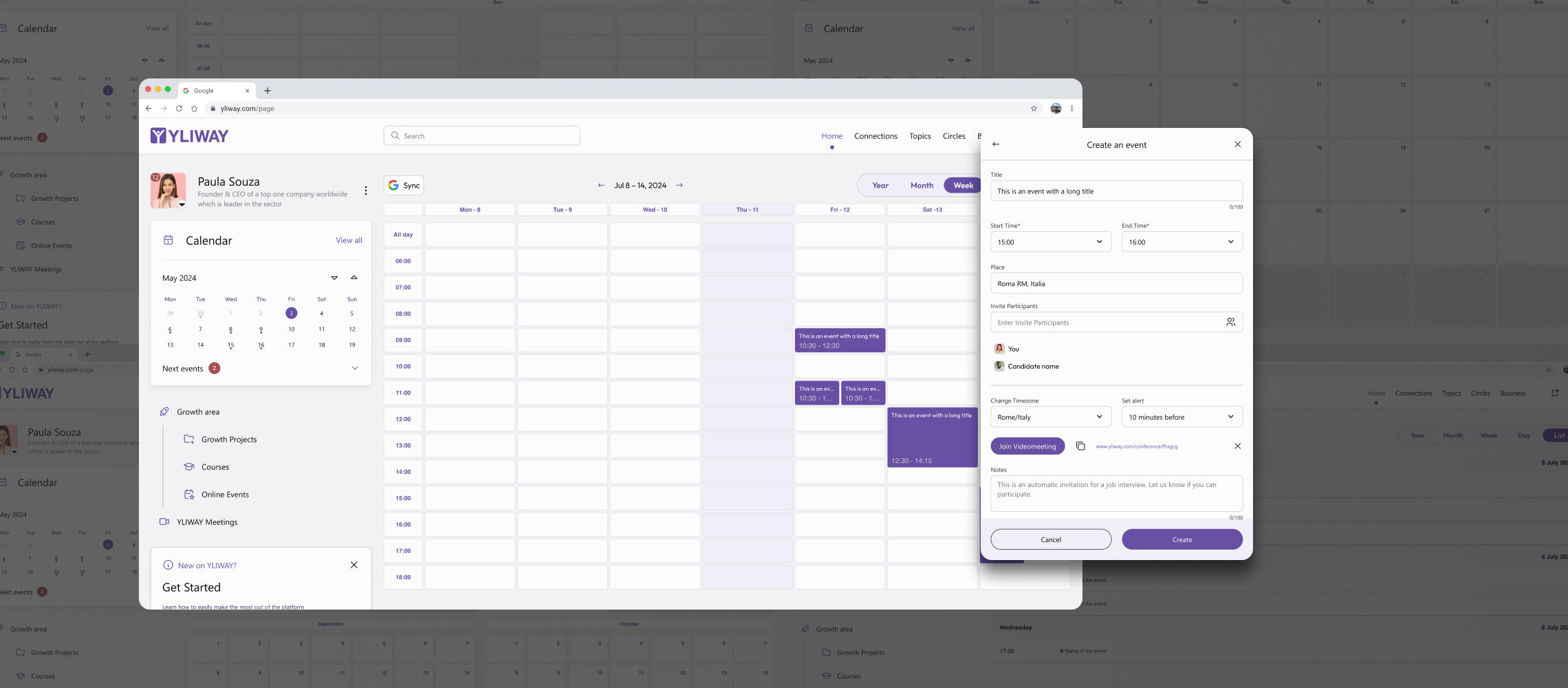
To ensure scalability, I created a complete Design System structured for long-term growth.
Built in Figma using:
- Design tokens (color, typography, spacing)
- Atomic component architecture
- Variant-based components
- Variables
- Fully auto-layout structured files
- Multi-role adaptable UI patterns
The system enabled consistency across modules and faster iteration.
Although the full redesign has not yet been implemented due to budget constraints, it established a scalable product foundation for future expansion.
(Insert Design System visuals)
Leadership & Product Thinking
Beyond interface design, I contributed to:
- Mentoring two junior designers
- Introducing structured workflow practices
- Supporting clearer task prioritization
- Aligning business ambition with product structure
Balancing immediate delivery with long-term system thinking was a core part of the role.
Outcome
- Clearer navigation and architecture
- Improved feature discoverability
- Unified visual language
- Scalable Design System
- Stronger structural foundation for growth
Yliway transitioned from feature-driven expansion to system-driven product thinking.